Key Takeaways
- Open Wearables eliminates months of wearable integration work by providing one unified API for major wearable platforms: Apple Health, Garmin, Whoop, Polar, Suunto, and Samsung Health Connect through standardized endpoints.
- Built for health app development, the platform handles complex OAuth flows, data normalization, and real-time syncing so developers can focus on building features instead of wrestling with multiple SDKs.
- Unlike expensive SaaS platforms creating vendor lock-in, Open Wearables is completely open-source and self-hosted, giving you full control over sensitive health monitoring data.
- The platform includes AI-ready data schemas, an MCP Server for Claude and ChatGPT integration, and multi-vendor support, enabling intelligent health coaching that understands recovery patterns and adapts recommendations in real-time.
- Developers can now build personalized wellness experiences in days instead of months, with complete access to unified wearable data that tells the full story of user health.
Is Your HealthTech Product Built for Success in Digital Health?
.avif)
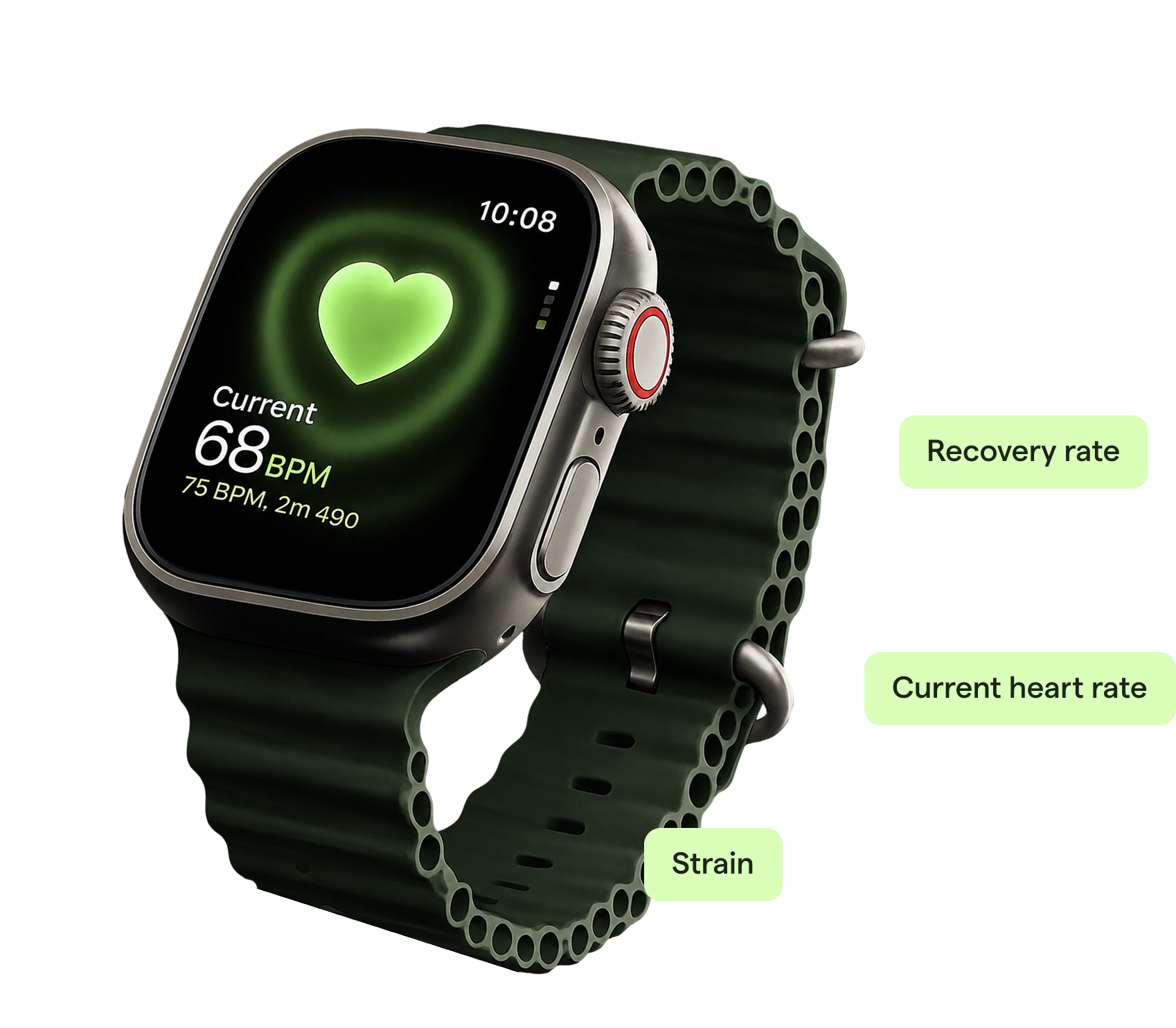
A health app that only tracks steps and heart rate is working with half the picture. It can tell a user exercised yesterday, but not whether their body actually recovered, whether their Oura Ring shows disrupted deep sleep, or whether a Whoop recovery score is signaling a rest day instead of another hard session. That gap between raw activity data and real health context is exactly what most wearable integrations get wrong, and it's the problem we kept running into building digital health platforms across wellness, fitness, longevity, and clinical care.
At Momentum, we've spent years building digital health platforms across wellness, fitness, longevity, and clinical care. Again and again, we saw the same problem: wearable integration and building intelligent, personalized health recommendations is still too complex.That's why we're introducing Open Wearables, an open-source platform that transforms fragmented device data into unified, AI-ready health intelligence through seamless wearable API integration.
Open Wearables is built for startups and scale-ups developing health, fitness, coaching, longevity, and corporate wellness applications. If your product needs wearable data from multiple providers and you want to avoid per-user SaaS fees, this is your foundation.
{{lead-magnet}}
Why Wearables Integration Is Hard
Each wearable device speaks a different language. To access data from major platforms and devices, you need to integrate multiple SDKs, handle different OAuth flows, and clean up messy formats. Just to start building.
Even then, the wearable data integration doesn't sync. You can't combine heart rate from one device with recovery from another. Your health app may work well on its own, but it stays blind to contextual wearable devices data like sleep quality, recovery status, HRV trends, and daily readiness.
This fragmentation forces developers into an impossible choice: support one wearable device and limit your market, spend months wrestling with wearable integration complexity instead of building health innovations, or pay expensive SaaS platforms that aggregate data but lock you into another vendor dependency.
None of these options serve healthcare innovation. The first limits your reach. The second wastes development resources. The third creates new dependencies while sacrificing control over your users' sensitive health monitoring data.
.png)
In practice, teams face three paths. Building direct integrations yourself is roughly 1-2 weeks to stand up each one. The lasting cost is what comes after: maintaining every connection, fixing the data model as providers change their APIs, and the specialized expertise and constant optimization that messy wearable data demands. It doesn't scale well, which is why the practical choice is a managed SaaS or Open Wearables rather than building and maintaining each integration in-house.
Paying for a SaaS aggregator gets you running faster, but per-user pricing works against you at scale. At ten thousand users, per-user SaaS pricing can add up to a substantial ongoing cost just for wearable data access. You don't own the infrastructure and can't see the code.
Open Wearables offers a third option: deploy it yourself, pay only for your infrastructure, own the code, and benefit from every integration the community builds. Your costs stay flat as you scale. We've written a detailed build-vs-buy analysis if you want to see the full economics.
If you need hands-on help standing up Open Wearables or wiring it into an existing health product, our wearables software development team handles that integration work directly.
What Open Wearables Does
Open Wearables is an open-source infrastructure that accelerates personal health app development through one single API. No vendor lock-in. No expensive SaaS for data aggregation. No complex SDKs. Just clean, AI-ready health monitoring data hosted by you.
In just five lines of code, you unlock:
- A single API for Apple Health, Samsung Health Connect, Google Health Connect, Garmin, Polar, Suunto, Oura, Fitbit, Whoop, and Ultrahuman, with new integrations added regularly
- Fully normalized and deduplicated wearable data with consistent timestamps
- OAuth flows handled out of the box
- Ready-to-use schemas for activity, sleep, biometrics, and recovery
- Self-hosted infrastructure for full control and compliance
- AI-ready endpoints for powering insights, scores, or chatbots
- MCP Server connecting wearable data to Claude, ChatGPT, and other AI assistants
- Flutter Health SDK for native Apple Health and Samsung Health integration with background sync
Build personalized recovery scores, sleep coaching, or biomarker dashboards without months of SDK work.
What You Can Build
Once you have unified wearable data integration, entirely new possibilities emerge. Fitness platforms can finally deliver coaching that adapts to actual recovery state, not generic training plans. A runner's health app can automatically reduce intensity when HRV drops, or suggest rest days based on poor sleep quality data.
Corporate wellness programs can track meaningful health monitoring trends across their entire workforce, regardless of wearable device preference. Instead of forcing employees onto one wearable brand, companies can support major smartwatch brands, fitness trackers, and specialty devices while still getting standardized analytics.
Take a marathon training app: instead of waiting for a runner to self-report fatigue, it can cut recommended mileage automatically when HRV drops two nights in a row, using recovery data pulled straight from the wearable.
Or a corporate wellness dashboard: instead of a generic monthly steps report, it can flag a spike in resting heart rate across a team during a high-pressure product launch week, giving HR a reason to check in before burnout sets in.
Longevity platforms can create truly personalized health journeys that track biological age patterns across multiple biomarkers. By combining sleep data from fitness rings, activity from smartwatches, and daily metrics from smartphone health apps, these platforms can reveal insights impossible to see from any single wearable device.
The key difference is context. Open Wearables transforms isolated data points into complete health stories that AI can actually understand and act upon.
With the MCP Server (shipped in v0.3), you can connect wearable data directly to AI assistants like Claude or ChatGPT. Users can use natural-language questions about their health data like: "How was my sleep this week?" or "What's my HRV trend?" and get answers grounded in their actual data. This turns raw wearable data into conversational health intelligence without building custom NLP pipelines.
Explore 8 real-world wearable data integration use cases to see how teams across fitness, healthcare, research, and enterprise are using it today.
.png)
The Vision Behind Open Wearables
We are building the open foundation for personalized health intelligence, where any app, coach, or health platform can instantly become data-driven, AI-enabled, and connected to the devices users already love.
Just open, standardized, developer-friendly health data ready to power your next product launch. So your product can see the full picture of your user's health, not just a slice.
This vision reflects our broader philosophy at Momentum: healthcare technology should be transparent, interoperable, and focused on patient outcomes rather than vendor profits. We believe wearable data should accelerate health innovation, not create new barriers.
{{lead-magnet-2}}
Get Started
Whether you're building personalized wellness apps, clinical decision support tools, or AI-powered health coaching platforms, Open Wearables is production-ready and completely open-source.
Here's how to get started:
- Explore the platform at github.com/the-momentum/open-wearables with complete documentation and deployment guides
- Deploy in minutes using "docker compose up" on your existing infrastructure
- Connect the first wearable with our step-by-step wearable integration examples
- Build intelligent features using our extensive wearable API integration library for complete user health contexts
- Read the docs at docs.openwearables.io for API reference, quickstart, and provider setup guides
- Read Open Wearables FAQ
As an active open-source project, new device integrations and platform features are continuously added by our growing developer community, ensuring the platform evolves with real-world needs.
What's New Since Publication?
Since this article was first published in December 2025, Open Wearables has shipped several major features:
- v0.7.0 (August 2026): a Google Health API integration built for the Fitbit sunset. Full release notes →
- v0.6.2 (June 2026): wearable data accuracy improvements for multi-device health apps. Full release notes →
- v0.6.1 (June 2026): expanded data coverage and observability tooling. Full release notes →
- v0.5.2 (May 2026): Polar refactor, expanded sport types, and stricter HRV data integrity. Full release notes →
- v0.4 (March 2026): Oura Ring integration (first provider contributed by a community member), React Native SDK completing the mobile lineup, raw payload storage to S3, provider disconnect API, and production docker-compose configuration. The project has crossed 2,400 GitHub stars. Full release notes →
- v0.3 (February 2026): an MCP Server that connects wearable data to Claude, ChatGPT, and other AI assistants through the Model Context Protocol; a Flutter Health SDK (health_bg_sync) for native Apple Health and Samsung Health Connect integration with automatic background sync; a redesigned developer dashboard with dedicated views for workouts, activity, sleep, and body measurements; and Whoop integration (v0.2.1) and one click deploy with Railway.
From Wearable Data to Health Intelligence
If your team has the data flowing and is now figuring out what to do with it, that is the starting point for Signal. Momentum's delivery framework for wearable health intelligence: Blueprint maps your use case, Foundation connects the data sources and deploys the intelligence layer, Intelligence lands coaching, insights, or dashboards inside your app. We bring the integrations, the data layer, and the intelligence. Your team ships the experience.
Frequently Asked Questions

%25201.png)


.avif)
.avif)
.avif)